
Current Temperature
 Log In
“Promises in Pencil”: The MD of Taber weighs its prairie against the plow
Posted on October 1, 2026 by Vauxhall Advance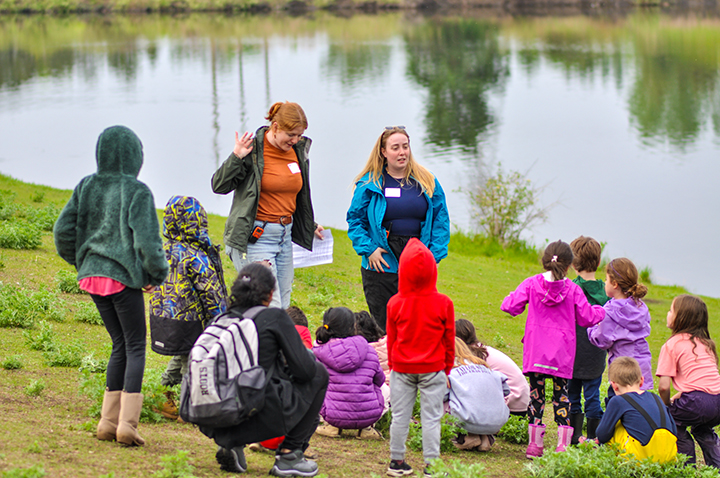 Advance Photo Submitted by Nature Alberta. PROMISES IN PENCIL: Fish Fin-atics event at a fish activites station in 2026.
By Nerissa McNaughton
Southern Alberta Newspapers
Local Journalism Initiative Reporter
A longstanding approach to prairie protection in the Municipal District of Taber is facing renewed scrutiny as several Alberta conservation organizations challenge how the municipality is handling tax recovery lands.
The History
The current debate over prairie lands in the Municipal District of Taber (MD of Taber) traces back nearly two decades to a written commitment made by the municipality to protect environmentally sensitive land from cultivation. That earlier pledge now sits alongside a more recent development plan, prompting concern from several Alberta conservation organizations.
It started in December 2007. Then-Reeve Hank Van Beers wrote to Ted Morton, Alberta’s Minister of Sustainable Resource Development, outlining steps to protect sensitive tax recovery lands from “breaking,” a term used to describe cultivating or plowing previously uncultivated ground. The letter said the municipality intended to register caveats against the titles of tax recovery lands to guard against future breaking, and to align its oil and gas policies with provincial standards. Van Beers described the measures as assurance to both the province and existing leaseholders that the land would be protected.
The Change
Fast forward to August 2025. The MD of Taber issued an official statement endorsing a plan to convert roughly 3,100 acres of municipally owned land near Scope Reservoir into irrigated cropland.
The municipality said the project, developed in partnership with the Bow River Irrigation District (BRID) would make use of reservoir water that is otherwise spilled, generate rental revenue for municipal infrastructure, and support the region’s agri-food sector.
The statement framed the initiative as responsible economic development and said tens of thousands of acres of municipal and Crown land would remain available for grazing and ranching.
This statement can be read online (mdtaber.ab.ca/p/official-statement-from-the-municipal-district-of-taber-regarding-proposed-irrigation-project).
The Stakeholders
There are many affected parties in play:
• MD of Taber council: Led by Reeve Tamara Miyanaga, council endorsed the irrigation initiative and has said it continues to review relevant policies as the project advances.
• Bow River Irrigation District: The MD’s partner on the proposed project, which the municipality says has long sought to expand irrigation downstream of Scope Reservoir to make fuller use of available water.
• Conservationist organizations: The Alberta Wilderness Association, Alberta Native Plant Council, Southern Alberta Group for the Environment, Canadian Parks and Wilderness Society Southern Alberta Chapter, and Nature Alberta jointly asked council to strengthen protections for native grasslands and tax recovery lands in a recent letter to Council. This letter was entered into correspondence for the August 18, 2026, Council meeting.
• Local grazing associations and ranchers: Identified by both the municipality and the conservation groups as key stakeholders, ranching operations rely on grazing leases across municipal and Crown lands, and the conservation groups have called for their inclusion in any stakeholder engagement.
• Alberta’s provincial government: The province, through the Ministry of Municipal Affairs, has engaged with the municipality on its land management plan. After a March 24, 2026, Council resolution requesting a municipal inspection, the minister determined an inspection was not warranted but said the Ministry remained available to provide governance and capacity-building support.
The Commentary
Taber Times reached out the MD of Taber, BRID, and the five conservationist organizations. Southern Alberta Group for the Environment and Canadian Parks and Wilderness Society Southern Alberta Chapter did not provide comments.
BRID
While BRID did not comment for this article at this time, Richard Phillips, General Manager, noted in the September 11, 2025, Taber Times article MD of Taber Grazing Lands at a Crossroad, “Adding water to add to dry land will increase that land value tremendously and increase revenue. Turning dry grazing land into cultivated lands means more revenue.”
Phillips referenced a study from the Alberta Irrigation Districts Association, titled Economic Value of Alberta’s Irrigation Districts (albertairrigation.ca). The study found that Alberta’s irrigation districts contribute $5.4 billion annually to the province’s GDP and generates eight times more revenue per hectare than dryland farming, despite covering only 4.4 per cent of the province’s cultivated land.
He also acknowledged that not everyone shares his view, while stressing what he sees as the wider benefit, noting a year ago that, “BRID does set aside land for natural use and values it just as much as conservationists. However, we don’t always see eye to eye on which land sometimes. We are not heartless. We are not just set on dollars. This land represents a unique opportunity for all.”
The Alberta Wilderness
Association
The Alberta Wilderness Association (AWA) actively opposes the plan, arguing that the municipality is undoing longstanding commitments to protect native prairie.
Cliff Wallis, a director with the organization, says the AWA has been engaged in protecting the Taber grasslands since before the tax recovery lands were transferred from provincial jurisdiction to the MD of Taber. He argues the MD’s plans run counter to the MD’s own Prairie Conservation Bylaw 1845 (mdtaber.ab.ca/Home/DownloadDocument?docId=2c2004ca-12a0-4b7b-8ae7-345a273fef55).
“This is a betrayal of trust. The MD of Taber signs its conservation promises in pencil,” he says. “Legal protection is needed to ensure their future.”
Wallis also pointed to the ecological stakes, saying the lands and nearby areas provide increasingly rare habitat for grassland species.
“Once lost, native grasslands are difficult or impossible to recover. Converting drought-resilient native grasslands to cropland is unlikely to be sustainable long-term, and risks repeating the mistakes of the past.”
Wallis said the organization is calling on MD of Taber residents and other Albertans to press for permanent conservation easements on municipally owned public grasslands, adding that the measures would “fulfill promises made when these lands were transferred.”
Ruiping Luo, a conservation specialist with the AWA, also weighed in.
“Native prairie is one of the most endangered ecosystems in the world, and Alberta has already lost a majority of our grasslands.”
Luo says the MD of Taber holds some of the largest sections of native prairie still remaining, and that breaking them would ripple through the environment and the community alike.
“Losing these sections would be devastating for the wildlife and ecosystem, as well as the ranchers that have grazed these lands for generations.”
Luo adds that the grasslands provide flood and drought tolerance, prevent soil erosion, and offer habitat for pollinators and other beneficial insects that support nearby agricultural productivity.
Overall, AWA questions whether the land is suited to cultivation at all. Luo said the soil in these areas is generally sandy, with severe water limitations for crops in a region already prone to drought and high winds.
“Previous cultivation in these areas has already failed, and breaking the soil of these lands risks recreating the dust storms of the 1930s”.
Residents who share these concerns can get involved, Luo adds, encouraging contact with municipal representatives or MLAs, to share information about the importance of native grasslands with their neighbours, and to reach out to the AWA for support or volunteer opportunities.
Alberta Native Plant Council
Alberta Native Plant Council (ANPC) has added its voice to the debate, cautioning that the conversion of prairie lands could erase native plant communities that cannot be replaced.
Kelly Ostermann, Membership and Volunteer Director of the ANPC, said the volunteer-run organization works to conserve native plants and native plant habitat across the province through outreach, stewardship, advocacy, and research.
“Development or conversion of these lands will mean that these native grasslands are lost forever,” says Ostermann.
The native prairie in question contains a large range of plants, including some documented as rare by Alberta Conservation Information Management System standards.
Ostermann notes that no full species inventory has been completed for the lands, cautioning, “Without an inventory of species on these lands, it is not known what is present and what may be lost with development.”
ANPC also frames the issue in broader ecological terms. Ostermann agrees with the AMA caution that intact native grasslands are the most threatened ecosystem in the province, supporting high biodiversity while sequestering carbon, mitigating soil erosion, and providing high-quality grazing land for ranchers.
The organization set out additional details in a letter to council on March 10, 2026, which is posted on the ANPC website (anpc.ab.ca/?p=12112).
Ostermann says those seeking support can email the ANPC at info@anpc.ab.ca, and residents looking for more information on prairie grassland conservation can visit anpc.ab.ca and reach out through the organization’s contact page.
Nature Alberta
Cheryl Bozarth Soll, President of Nature Alberta, says the non-profit works as a champion for the appreciation and conservation of nature across the province. The organization runs free events that connect people to nature, advances citizen science, produces the quarterly Nature Alberta Magazine, and supports a network of more than 50 grassroots nature clubs.
“Native prairie grasslands are one of our most threatened ecosystems, so we recognize the great urgency in protecting and sustaining existing parcels of healthy native grasslands in the MD of Taber,” says Bozarth Soll.
She continues, noting that converting the grasslands means the loss of critical habitat, biodiversity, and the ecological and agricultural benefits these landscapes provide.
Nature Alberta also points to further research on the issue via Paul Thibault, the organization’s southern regional representative and Chair of the Grassland Naturalists’ Irrigation Committee. Thibault produced an in-depth report on Alberta’s irrigation expansion and river flows in the South Saskatchewan River Basin, with a summarized version published in the Summer 2025, water-themed issue of Nature Alberta Magazine.
Thibault’s Alberta Irrigation Expansion: The Four Pillars of Water Availability (June 15, 2025, (naturealberta.ca/irrigation-expansion-report) says the case for expansion rests on four arguments: that irrigators are using less water than they are allocated, that irrigation efficiency continues to improve, that new and expanded reservoirs will offset the effects of climate change, and that computer modelling confirms enough water will be available.
However, the report finds no clear agreement among those models on whether that supply will hold. Some studies suggest climate change will reduce the water available for irrigation, while others conclude there will be enough if it is carefully managed through new and expanded reservoirs. According to the report, the models differ significantly in their methods, and uncertainty remains in climate predictions, particularly around precipitation.
Bozarth Soll encourages those who want to get involved to view resources provided by Nature Alberta, or to support the organization’s clubs and events.
The MD of Taber’s Response:
Accounting for the Past, Present, and Future
The MD of Taber finds itself weighing decisions that reach well beyond the boundaries of any single parcel of land. On one side sits a commitment made in 2007. On another sits the present, shaped by pressure to expand irrigation, develop agricultural land, and generate revenue to sustain municipal services. Looming over it all is a future defined by a growing population, mounting questions about food security and self-sufficiency, and shifting economic and political currents across Alberta and Canada.
The choices before Council are not simply a matter of conservation set against farming; they touch on how a rural municipality reconciles past promises with present demands and an uncertain road ahead.
It is a balance the MD of Taber takes very seriously.
Not only did the MD of Taber formally acknowledge the letter sent by the conservationists – the MD replied.
In a letter dated August 24, 2026, signed by Reeve Tamara Miyanaga, council thanked the five organizations for their submission on the protection of native prairie on tax recovery lands. The Alberta Wilderness Association published this response on their website (albertawilderness.ca/response-from-taber-council-on-grasslands-protection).
The letter says council valued the perspectives on the ecological, agricultural, and community importance of native prairie and had received and reviewed the recommendations. It stated that council “remains committed to exploring opportunities for grassland preservation” within the municipality, adding that this work would continue alongside community grazing associations and interested leaseholders to weigh approaches that balance “environmental stewardship, agricultural sustainability, and local community interests.” Council also pointed the organizations to its formal delegation process, inviting them to present their concerns directly.
The MD also responded quickly and directly to Taber Times, with Reeve Miyanaga saying, “The MD of Taber recognizes and values feedback from residents and interested organizations and provides formal opportunities for them to present their perspectives to Council. The concerns raised regarding municipally owned grasslands have been considered by Council and were considered in the recently approved agricultural land management policies. Lease agreements are expected to be signed as soon as practical moving forward. As other agricultural land policies are reviewed, Council will consider new information and assess their effectiveness to ensure they serve the best interests of the municipality and its residents.”
Where do we all go from here?
The debate over the MD of Taber’s prairie lands does not offer a simple resolution. It sits at the meeting point of competing ideals, each with real weight.
On one side stands the case for careful stewardship: native grasslands that took centuries to form, that anchor soil, buffer against drought and flood, and shelter species found in few other places. On the other stands the case for development: land that could produce more food, generate revenue for the services residents depend on, and put reservoir water to use rather than letting it spill away.
All arguments come from people who know this land well, and all point to a future they believe is worth protecting.
For now, the municipality has signaled that it will keep reviewing its policies and weighing new information, while stopping short of the firm protections for which the conservationists have asked. Whether that measured approach satisfies the parties involved, or whether it defers a decision that will only grow more consequential, remains to be seen.
The residents of the MD of Taber, and Albertans watching from beyond its borders, are left with questions that have no easy answers. How much native prairie is enough to keep, and who decides? What does responsible growth look like in a region shaped by drought, wind, and a changing climate? And when a municipality makes a promise about the land, how binding should that promise be a generation later?
Only time will tell.
Leave a Reply
You must be logged in to post a comment.