
Current Temperature
 Log In
JBS foods removes net-zero plans in new strategy
Posted on August 20, 2026 by Vauxhall Advance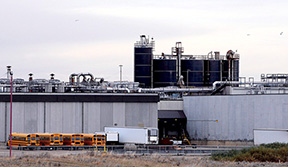 Southern Alberta Newspapers File Photo. NEW STRATEGY: JBS Foods, which owns and operates the meat-packing plant in Brooks, says it significantly loosened its emissions-lowering goals in order to better align with stakeholder and consumer expectations.
By Zoe Mason
Southern Alberta Newspapers
A regional manufacturing giant has walked back several major sustainability goals, according to a recent corporate strategy.
JBS Foods is the world’s largest meat processing corporation, and a major employer in the south Alberta region thanks to the beef processing facility in Brooks, which employs more than 2,800 people.
Last month, the corporation released its latest sustainability framework. However, the strategy included several notable reductions and omissions.
Major departures from the previous strategy include walking back a commitment to net-zero emissions by the year 2040 and a failure to mention a previous commitment to eliminate deforestation by 2030. Those goals were set in 2021 and 2022, respectively.
In a statement to Southern Alberta Newspapers, JBS Foods said the updated framework aligns more closely with customer expectations and business performance.
“Our updated sustainability framework reflects a disciplined evolution, strengthening operational fundamentals, advancing measurable progress and building long-term supply chain resilience,” reads the statement.
“Sustainability remains integrated into how we operate as we continue producing high-quality food while managing environmental impacts.”
The July framework walks back earlier goals, reducing the scope of carbon neutrality targets to apply only to Scope 1 and 2 greenhouse gas emissions, which cover direct and indirect emissions from sources like purchased electricity, heating or cooling.
Scope 3 emissions are not considered by the new goals. Scope 3 includes all emissions across the supply chain.
The updated strategy also weakens reductions, from net-zero to a 30 per cent reduction by 2030 and a 70 per cent reduction by 2050.
In a July 8 blog post, global chief sustainability officer Jason Weller said the company realized the net-zero goal, which spanned hundreds of thousands of producers across dozens of countries, was an immense challenge.
“What has changed is the level of discipline stakeholders expect from corporate sustainability goals. Customers, investors, regulators and communities want goals that are measurable, comparable and tied to clear action. We agree,” wrote Weller.
He said the kinds of data access, technology and measurement infrastructure needed to monitor original targets does not yet exist.
“We’re not walking away,” Weller wrote. “We are strengthening our framework so our goals better reflect where we can take direct action, measure progress consistently and hold ourselves accountable.”
It is not the first time JBS Foods has been subject to scrutiny for failure to meet stated environmental goals.
In 2024, New York Attorney General Letitia James sued JBS USA after an investigation revealed the corporation was violating the state’s consumer protection laws by misleading the public about its net-zero goals.
“JBS USA made sweeping promises about its parent company’s climate impacts despite the company having no real plan to back those promises up,” James said in a statement.
The investigation found JBS Group had no viable plan to reach the goal, and rather was planning to increase production, which would increase the corporation’s emissions. It also found the company had not yet calculated its total GHG emissions at the time the goal was set.
JBS USA paid $1.1 million for the suit. The money was used to fund science-based initiatives in New York.
Leave a Reply
You must be logged in to post a comment.